


Why Singing Isn't Learned the Way We Were Taught: How the Brain Learns Singing

Updated: Oct 7
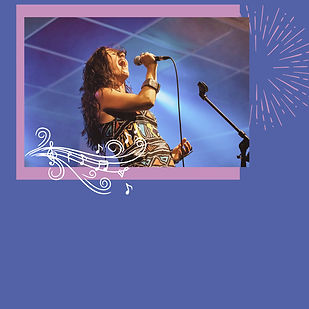
As voice teachers and vocal coaches, many of us were trained with a fundamental misunderstanding about how the brain learns singing. It’s subtle, and it’s common—but when we look at singing through the lens of neuroscience and motor learning, it becomes a very big deal.
Declarative Learning: How Most of Us Were Taught in School
Most of the education we get in school is declarative. We memorize facts, sequences, and rules. We learn the capitals of countries, the periodic table, and historical dates. Declarative learning is about information we can consciously recall (at least until we finish the test 😉). If we're interested in the information or access it enough times, it will stick with us. But that's not how the brain learns singing.
How the brain learns singing
The problem with learning singing through shared declarative information is that singing doesn't really live there. Singing–like all coordinated physical skills–is governed by motor learning. Motor learning is organic, experiential, and embodied. It's slow, nonlinear, and deeply tied to your brain's ability to create, refine, and automate movement patterns. And yet, many of us have been taught as though singing were another geography quiz.
Our voice teachers weren't trying to mislead us. They just weren't clear that these are

fundamentally different types of learning. Most of us received instructions through directives for applications of sounds and physical "fixes". We were often taught technique as if it were something to memorize rather than a set of sensations to discover.
Why Declarative Teaching Fails Motor Learning in Singing
Motor learning doesn't work that way. You can tell someone, "Do this to get that," in a voice lesson, and it may work in the moment. But...did the singer understand what happened? Did their nervous system register the change? Did the new coordination integrate into their regular singing? Will it show up automatically and authentically in performance? In other words, was this change organic at the level of motor learning?
Singing technique is not memorized information—it’s a motor skill that must be learned through sensation, repetition, and the brain’s natural error-correction process.
If a singer feels overloaded with technical directives–"lift here," "relax this," "engage that," "not like that, like this"–it engages the brain to seek approval rather than sensations. A brain that is working to avoid correction is in a very different state than one that is engaging its innate error-correction system. Further, that background chatter of self-correction creates a divide between the singer and the music. The natural, confident connection with music that both singer and audience seek is lost to the singer's internal monitor that is trying to meet external standards.
That internal surveillance system pulls them away from expression, connection, and presence.

Motor Learning: How the Brain Actually Learns Singing
In voice training, motor learning means the brain gradually builds automatic coordination through repetition and sensory experience — not memorized steps.
When we stimulate organic motor learning via the brain's error-correction system–its natural, embodied process of figuring things out–something entirely different happens. The singer begins to internalize the sensations of healthy, efficient coordination. They don't have to check whether they're "doing it right" because their body knows. Their brain knows. The feeling of "right" becomes familiar, repetitive, and automatic.
When change emerges through organic motor learning, music becomes the guide. A singer can connect with the artistic moment without the background noise of technical self-judgment. A singer can trust the sensations they have come to recognize. A singer can trust the way their brain learns singing.
Theis is the heart of NeuroVocal work. When we align voice teaching with how the brain actually learns motor skills, technique becomes more reliable—and singing becomes more expressive, present, and joyful.
Your brain sings before you do. And when learning to sing happens organically, everything else falls into place.
Want to learn more?
Download a chapter from my book Your Brain Sings Before You Do
Available in ebook & print (2026) and audiobook (2027)
Meredith Colby coaches singers of all levels online from her indie studio in Chicago. She's the original developer of NeuroVocal Method, and the author of Money Notes: How to Sing High, Loud, Healthy, and Forever and Your Brain Sings Before You Do. Meredith's content can be found here, on social media, and on the NeuroVocal YouTube channel.


Comments